Pictures and Scale
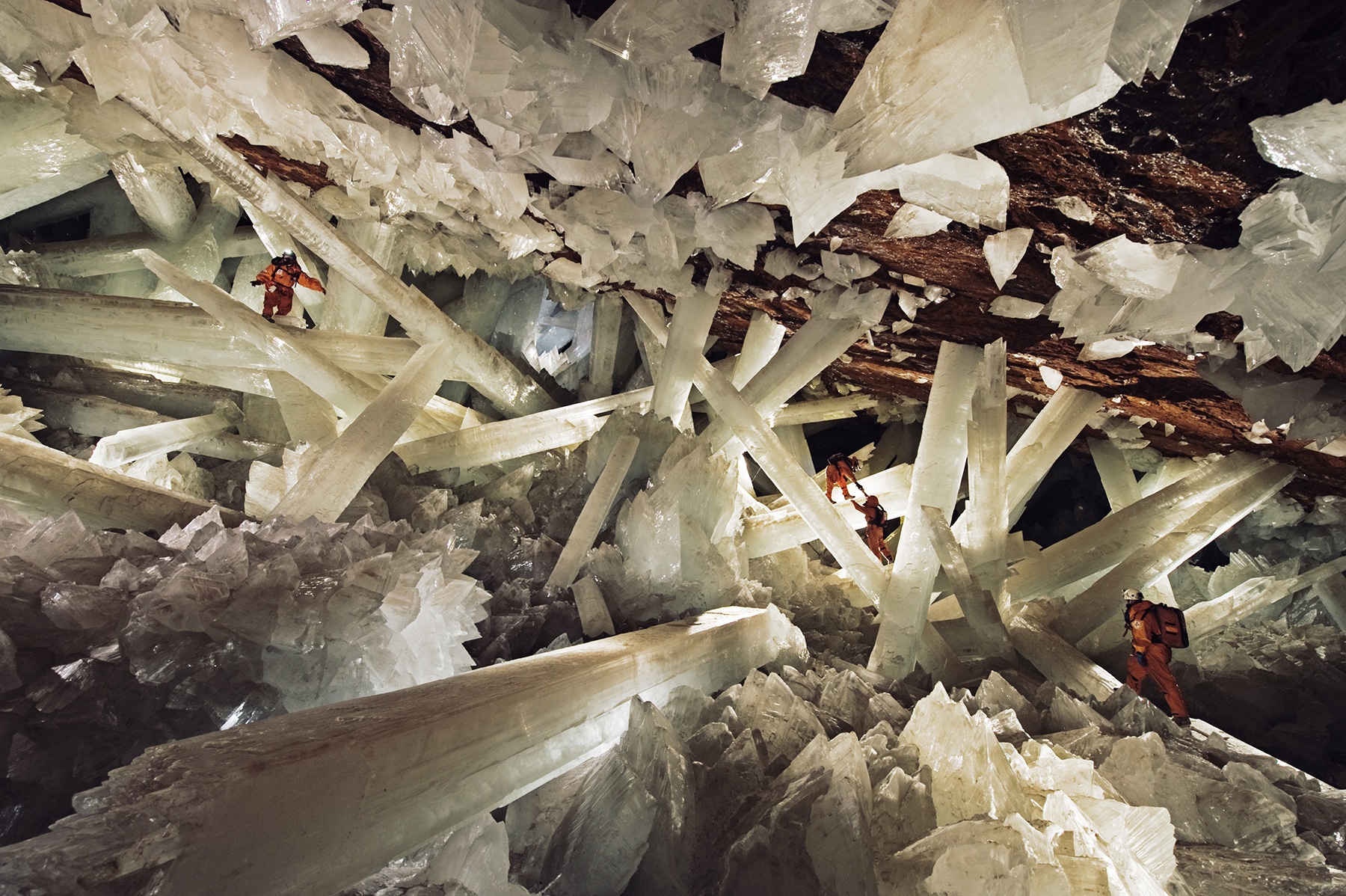

"García and his colleagues pieced together the story of the crystals' growth. For hundreds of thousands of years, groundwater saturated with calcium sulfate filtered through the many caves at Naica, warmed by heat from the magma below. As the magma cooled, water temperature inside the cave eventually stabilized at about 136°F. At this temperature minerals in the water began converting to selenite, molecules of which were laid down like tiny bricks to form crystals. In other caves under the mountain, the temperature fluctuated or the environment was somehow disturbed, resulting in different and smaller crystals. But inside the Cave of Crystals, conditions remained unchanged for millennia. Above ground, volcanoes exploded and ice sheets pulverized the continents. Human generations came and went. Below, enwombed in silence and near complete stasis, the crystals steadily grew. Only around 1985, when miners using massive pumps lowered the water table and unknowingly drained the cave, did the process of accretion stop."
from: http://ngm.nationalgeographic.com/2008/11/crystal-giants/shea-text/1
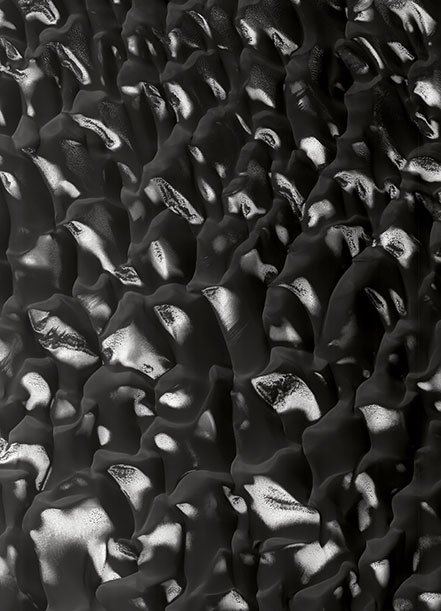
Field of Dunes in the Proctor Crater, LAT: -47.2° LONG: 33.9° © NASA/JPL/University of Arizona “Hundreds of black-sand dunes of basaltic composition have accumulated on the floor of the Proctor crater,” writes Mangold. “In winter, because of the relatively high latitude (47° south), these dunes are covered by frost and carbonic ice, in particular on the polar flanks deprived of sunlight, thus creating a sharp contrast in tone.”
from: http://blogs.smithsonianmag.com/artscience/2013/10/this-is-mars-in-extremely-high-resolution/
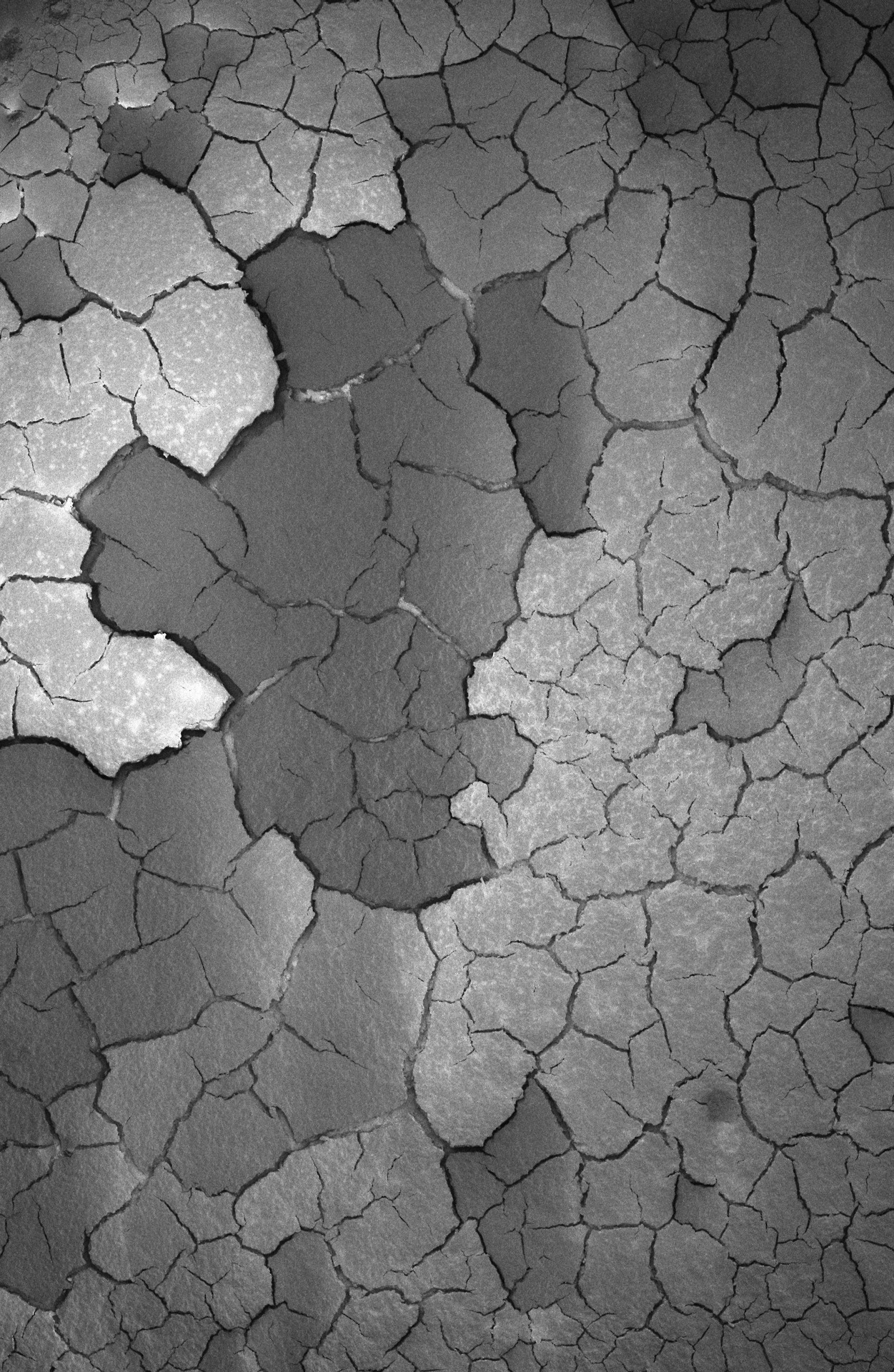
"Blood, dried without fixation, 35x magnification. I think the shades are due to differences in the conductivity of each of the pieces."
from: http://micro-universe.tumblr.com/post/47842531553/my-blood-dried-without-fixation-35x