In the Middle of It All
Last time I wrote, my new roommates had just moved in. They are two graduate students from UC Irvine, and they are great people! I'm out of the apartment building for most of the day, either at my office at CERN, or out with the other Yalies eating dinner/playing charades, but when I do stay at the apartment for dinner, the food they cook is always tasty and the conversation always enjoyable.
Living with them has been such a pleasure as well. It may just be because they're older, but the way we live in this apartment is so much better than the dorm life at college. I do a great deal of cleaning when I'm at school, but living with five other people means things don't stay clean for very long, especially if no one else cleans. The accumulation of dust and trash makes me feel sick after an extended period of time. Here, it's the exact opposite. We take turns doing the dishes right after we're done eating the meal, the bathroom is kept tidy, and the floors are swept often. The beds are made, and clothes are not strewn about on the floor. We keep a nice apartment! Because it remains clean, it feels much more like a place I can unwind and relax in when I come back from CERN. We have a big balcony in the apartment as well, so after eating dinner and doing the dishes, we often take our chairs outside along with some ice cream or beer, and just talk until it gets dark.
The apartment is located in a quaint French town just outside of the Swiss border called St. Genis-Pouilly. It's a quiet place, mostly surrounded by farms. A part of the LHC actually goes underneath the town, so while the cows are munching on their grass and we're sitting on our balcony, protons are also racing at high speeds below our hoofs and feet.
By now I've gotten over my jetlag and have settled into a nice daily routine. I wake up every morning at around 7 AM, open the windows, make the bed, have a slow breakfast, and do some light cleaning. The air is really crisp in the morning, and it couples nicely with the summer warmth, meaning it isn't biting or chilly. If I need some more milk or a fresh baguette for the day, I'll then do some morning shopping at the grocery store that's just a seven minute walk away .
On weekdays, I take the bus into CERN and arrive in my office around 9 AM. I'm usually the first one in. I open all the windows, and let the crisp air fill that room as well. The office is beautiful. White tables, white floors, and all very clean. One wall is entirely glass and faces out onto more farmland, as well as a tiny, green, horse-racing track. Some days there will be young girls training on their horses, jumping over the fences and posts set around the course. I'm the only one in the office for a good hour or so usually, so I also get to be completely quiet and within myself as I work on whatever needs to get done. My mornings feel very peaceful. If I need it, I'll have small cup of coffee, but usually I feel refreshed and energized enough by the air. I feel the most sharp during the morning hours, so it's when I solve most of the problems I have in my work. Problem that were intractable the afternoon before usually work themselves out pretty easily in the morning.
Like I mentioned before, my work is mostly centered around measuring the charm-jet efficiency for a tagging algorithm used in the ATLAS detector. I should really take a post to explain some basics about particle colliders, but maybe for now I'll just say that there are certain particles produced in the collisions at the LHC that are more interesting than others, and I'm trying to find a way to measure how good we are at finding these interesting particles. Charm quarks (the interesting particle I'm working with) are notoriously difficult to identify correctly, so right now I'm working with simulations to figure out if the project goal is at least possible, even when we know all the information. This involves drawing a lot of plots with a program called ROOT that takes data from many, many particle collisions, and places them in easy to interpret graphs. All of my time is spent making these graphs.
At around lunch time, other Yale people come in and the office becomes more lively. We laugh a lot and there's usually interesting conversation. Though it's distracting, I've usually done most of my pressing work by then and am letting the computer do some extremely time-intensive calculations, so I don't mind the sidetrack. Lunch is usually outside, or in a glass house close to the cafeteria. I mostly stick with Yale people, but sometimes I'll find some other young physicists and sit with them. In the afternoon it's harder to work, since food makes me sleepy, but I do my best to get as much as I can done. I usually leave the office at around 6 PM, making my week pretty full of work.
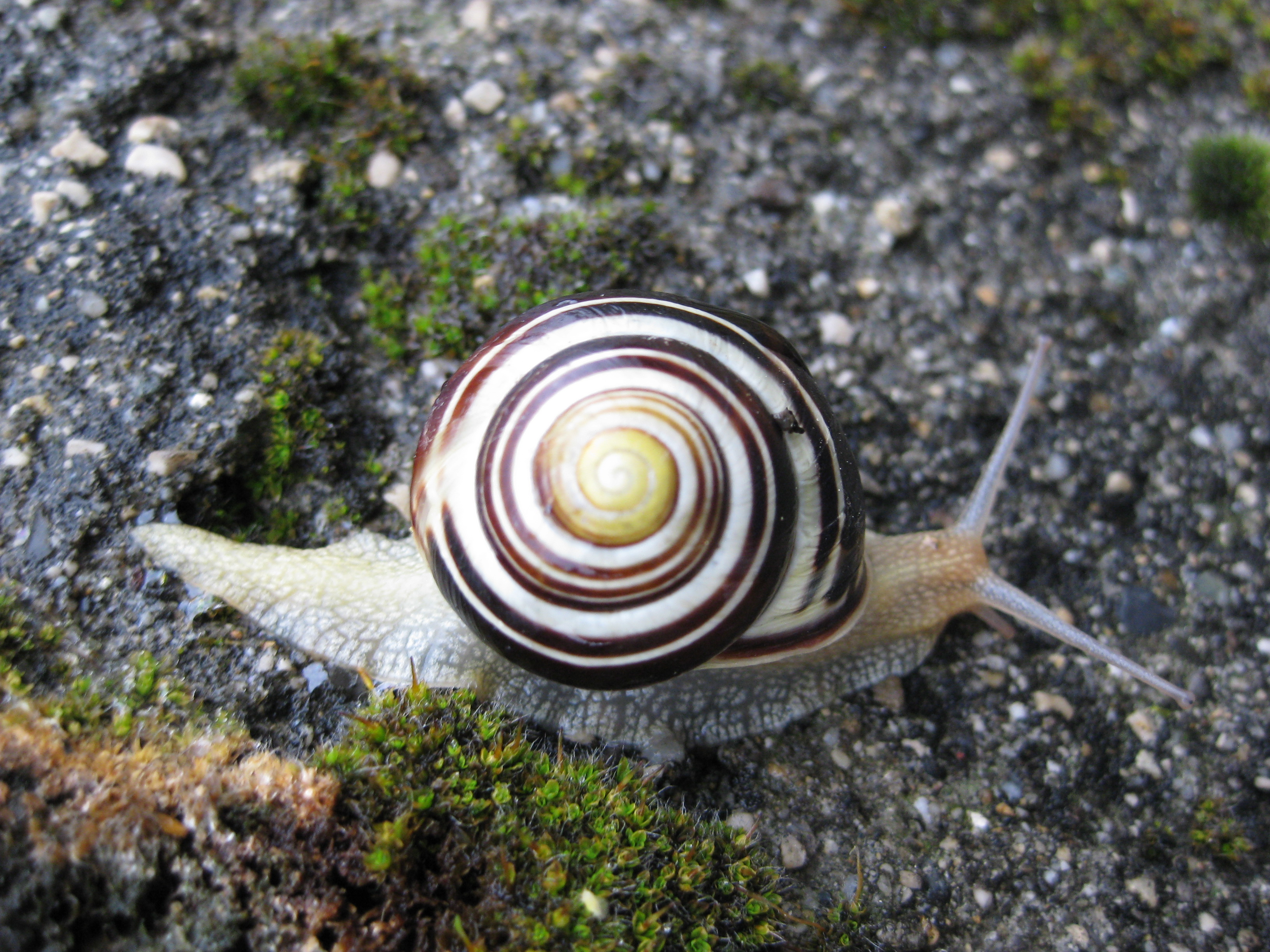
Weekends I go into the city or go hiking. There is a mountain range close to where we live called the Jura, and from what I hear, the view from the top is amazing. The view towards the top from the bottom isn't that bad, either. It's especially arresting on rainy days. The clouds pour down these mountains like a grand river in slow motion. They never make it down the mountain though, spreading out and disappearing into a light fog, like the mists at the bottom of a waterfall. That fog spreads all the way to St. Genis, and it cuts the summer heat and makes the air smell like the forests from which they came. Snails come out of hiding on these days as well and cover the sidewalks, and the patterns on their shell are always so wonderful to look at.

Once again, one wonders about the mathematics of Nature. There are the symmetries associated with the most fundamental tier, the groups of quarks and leptons, and there are also the geometrical symmetries at the biological level, in the shape of a snail's shell. (Question: What determines if a snail's shell curls clockwise or counter clockwise? Is there a preferred direction?) The tiers build from the most simple towards the more complex, and there is a thread that connects all the levels in some way. In what wonderful ways does this thread meander? In what creative ways can the human intellect follow the path it takes?
I'm really enjoying my time in Geneva, both during the work and during the time off. I would not mind this kind of career. Now, this might just be the novelty of the first two weeks of doing something new. I could end up getting bored of this work after doing it for two more weeks. But, at least for now, it doesn't feel tedious to me. I find the work that I'm doing quite interesting. In my own tiny, insignificant sort of way, I'm helping to move our understanding of the world forward. Not only that, but I'm doing it by using data that simulates the conditions of the early universe, which is pretty cool. The people I work with are kind, intelligent, and laid back. I like the slow pace of things, and the quietness of the work.
Anyway, tomorrow I'm going on a hike up the Jura. There should be a great view of Mont Blanc from the top of the ridge, so I'll be sure to take a lot of pictures!
[EDIT: Answer to the snail shell question:
Dextral shells (right handed) spiral downwards in a clockwise direction while sinistral shells (left handed) spiral counter clockwise, Figure 2. The direction, clockwise or counter clockwise, of the coiling property of the snail shell is called chirality(Patel 2009). Most snail shells, when you look at them, are dextral shells while only a few spiral counter clockwise and are sinistral shells (Patel 2009). Roughly 90% of snails found in nature will have dextral shells (Schilthuizen and Davison 2005). Sinistrality is a recessive genetic trait, while dextrality is a dominant genetic trait (Patel 2009). These differences in chirality are expressed in the glands that produce the snail shell. This gland produces material at different rates on the left and right sides. This results in left-right asymmetry as the snail grows and its shell spirals (Patel 2009). Kuroda et al. (2009) discovered they could manipulate the asymmetry of snail shells by altering the direction of the cells in the snail embryo.
So Cool!]